1568 A Challenging Christmas Tree

Today’s Puzzle:

Can you write the numbers from 1 to 10 in each of the boldly outlined columns and rows so that each quadrant of this Christmas tree puzzle behaves like a multiplication table? Remember to use logic and not guessing and checking.

Here is the same puzzle that won’t use so much ink to print:

1568 Factor Tree:

Here is one of several possible factor trees for 1568:

Factors of 1568:

  • 1568 is a composite number.
  • Prime factorization: 1568 = 2 × 2 × 2 × 2 × 2 × 7 × 7, which can be written 1568 = 2⁵ × 7².
  • 1568 has at least one exponent greater than 1 in its prime factorization so √1568 can be simplified. Taking the factor pair from the factor pair table below with the largest square number factor, we get √1568 = (√784)(√2) = 28√2.
  • The exponents in the prime factorization are 5 and 2. Adding one to each exponent and multiplying we get (5 + 1)(2 + 1) = 6 × 3 = 18. Therefore 1568 has exactly 18 factors.
  • The factors of 1568 are outlined with their factor pair partners in the graphic below.

More about the Number 1568:

1568 is the difference of two squares SIX different ways:
393² – 391² = 1568,
198² – 194² = 1568,
102² – 94² = 1568,
63² – 49² = 1568,
57² – 41² = 1568, and
42² – 14² = 1568.

1567 Peppermint Stick

Today’s Puzzle:

Our mystery level puzzle looks like a sweet stick of Christmas candy. Will solving it be sweet or will it be sticky? You’ll have to try it yourself to know.

Factors of 1567:

  • 1567 is a prime number.
  • Prime factorization: 1567 is prime.
  • 1567 has no exponents greater than 1 in its prime factorization, so √1567 cannot be simplified.
  • The exponent in the prime factorization is 1. Adding one to that exponent we get (1 + 1) = 2. Therefore 1567 has exactly 2 factors.
  • The factors of 1567 are outlined with their factor pair partners in the graphic below.

How do we know that 1567 is a prime number? If 1567 were not a prime number, then it would be divisible by at least one prime number less than or equal to √1567. Since 1567 cannot be divided evenly by 2, 3, 5, 7, 11, 13, 17, 19, 23, 29, 31, or 37, we know that 1567 is a prime number.

More about the Number 1567:

1567 is the sum of two consecutive numbers:
783 + 784 = 1567.

1567 is also the difference of two consecutive squares:
784² – 783² = 1567.

1566 How to Make a Magic Square Snowflake

Today’s Puzzle:

Can you place all the numbers from one to nine in a 3 × 3 grid so that the numbers on each of the four edges and the numbers on each of the four lines of symmetry (where the fold lines are) have the same sum?

Here are some hints to get you started:

Begin by grouping and adding the numbers in this fashion:
Odd numbers 1 + 9 = 10,
Even numbers 2 + 8 = 10.
Odd numbers 3 + 7 = 10,
Even numbers 4 + 6 = 10, leaving you with just
5, which has no partner so it must go in the center of the magic square.

Those four sums plus 5 will form the four lines of symmetry, each with a magic sum of 10 + 5 = 15. Where do you put the sums in the magic square? Notice that the only way the edges can equal an odd number like 15 is to add two even numbers and one odd. (Adding two odd numbers and an even will never give you an odd number.) That means even numbers must go in the corners and an odd number will go between them.

Place the 1 in the middle of any edge. Place the nine in the middle on the opposite edge. What numbers will go on the edge with the 1? They must be two numbers that add up to 15 – 1 = 14. Only two of the even numbers add up to 14. Place them on the square on either side of the 1. Place their partners from the sums to 10 that are written above on their same lines of symmetry. Now you only have two odd numbers left to place. Place them so that those edges add up to 15.

Using a hole punch to make the numbers instead of writing numerals makes the snowflake even better: There are eight different orientations for the numbers to be on the snowflake, but all eight ways really only form one possible snowflake.

Keep the grid you’ve made with your numerals. You will need it to know where to punch your holes in your snowflake.

How to Make Your Own Magic Square Snowflake:

You will need an 8 1/2 by 11 sheet of white printer paper, scissors, and a hole punch. Decorative scissors are optional.

  1. Begin with an 8 1/2 by 11 sheet of white printer paper. Follow  Paula Krieg’s instructions on how to fold and cut it into an 8 1/2 × 8 1/2 perfect square.
  2. Make a crease along both diagonals of your square. Unfold.
  3. Follow EZ Origami’s instructions on how to fold your square into thirds. Unfold.
  4. Turn your square 90° and follow EZ Origami’s instructions again to divide your square into thirds in the other direction.
  5. Fold snowflake in half vertically and then horizontally. Unfold.
  6. If desired, use decorative scissors to give your snowflake a pretty edge. You can cut two edges at the same time. Unfold.
  7. Make a narrow cut along the folds of the smaller square edges, taking care not to cut where the folds intersect. Unfold. (Do not use decorative scissors for this step.)
  8. Use the grid with numerals that you made earlier and a hole punch to place the right number of holes in each of the nine squares. An ordinary hole punch with handles will work, but I used the decorative one pictured below.

I used the following facts to make my holes with my hole punch in the appropriate squares. Look at the snowflake picture above if clarification is needed:
1. Make a single punch in the center of its square.
2(1) = 2. Fold paper on diagonal, make a single punch above the diagonal.
2(3(1/2)) = 3. Fold paper on diagonal, make three half punches on the diagonal. Unfold.
2(2) = 4. Fold paper on diagonal, make two punches above the diagonal. Unfold.
4(1 + 1/4) = 5. The center square has four smaller squares. Fold center square to make one small square with four thicknesses, make 1/4 punch at corner of folds in center of snowflake. Make a single punch in center of small, thick square. Unfold.
2(3) = 6. Fold paper on diagonal, make three punches above the diagonal. Unfold.
2(3 + 1/2) = 7. Fold paper on diagonal, make half punch on center of diagonal and three punches above the diagonal. Unfold.
2(4) = 8. Fold paper on diagonal, make four punches above the diagonal. Unfold.
2((3 + 3(1/2)) = 9. Fold paper on diagonal, make three half punches on diagonal and three punches above the diagonal. Unfold.

Finding the Prime Factorization of 1566:

Since this is my 1566th post, I’ll explain how I find its prime factorization using as few divisions as I possibly can.

I know that 1566 can be divided by 9 because 1 + 5 + 6 + 6 = 18, a multiple of 9.
1566 ÷ 9 = 174.

I know that 174 can be divided by 6 because it is even and 1 + 7 + 4 = 12, a multiple of 3.
174 ÷ 6 = 29.

I show my work here:

Now all that’s left to do is put the prime factors in numerical order with exponents.

Factors of 1566:

  • 1566 is a composite number.
  • Prime factorization: 1566 = 2 × 3 × 3 × 3 × 29, which can be written 1566 = 2 × 3³ × 29.
  • 1566 has at least one exponent greater than 1 in its prime factorization so √1566 can be simplified. Taking the factor pair from the factor pair table below with the largest square number factor, we get √1566 = (√9)(√174) = 3√174.
  • The exponents in the prime factorization are 1,3 and 1. Adding one to each exponent and multiplying we get (1 + 1)(3 + 1)(1 + 1) = 2 × 4 × 2 = 16. Therefore 1566 has exactly 16 factors.
  • The factors of 1566 are outlined with their factor pair partners in the graphic below.

More about the Number 1566:

1566 is the hypotenuse of a Pythagorean triple:
1080-1134-1566 which is (20-21-29) times 54.

Since 1566 is a multiple of 3, it is the magic sum of this 3 × 3 magic square:

That can happen for ANY multiple of 3. Multiples of 3 that are less than 15 must have negative numbers in their magic squares in order to be the magic sum. For example, zero is a multiple of 3 because 3 × 0 = 0. Here’s how zero is the magic sum of a magic square:


1565 Stable with Manger

Today’s Puzzle:

This mystery level puzzle reminds me of the manger in the stable that first Christmas night.

How difficult will the puzzle be to solve? That is part of the mystery. You will have to try it for yourself to find out.

Factors of 1565:

  • 1565 is a composite number.
  • Prime factorization: 1565 = 5 × 313.
  • 1565 has no exponents greater than 1 in its prime factorization, so √1565 cannot be simplified.
  • The exponents in the prime factorization are 1 and 1. Adding one to each exponent and multiplying we get (1 + 1)(1 + 1) = 2 × 2 = 4. Therefore 1565 has exactly 4 factors.
  • The factors of 1565 are outlined with their factor pair partners in the graphic below.

More about the Number 1565:

1565 is the sum of two squares in two different ways:
37² + 14² = 1565, and
38² + 11² = 1565.

125-1560-1565, which is 5 times (25-312-313),
836-1323-1565, calculated from 2(38)(11), 38² – 11², 38² + 11²,
939-1252-1565, which is (3-4-5) times 313, and
1036-1173-1565, calculated from 2(37)(14), 37² – 14², 37² + 14².

1564 Two Candles

Today’s Puzzle:

Candles that are lit in the darkness can be seen from quite a distance away.  Candles and candlelight are symbols of Christmas. The babe born on that first Christmas day would become the Light of the World.

What makes a level 6 puzzle more difficult? Can you see that the common factor of 60 and 30 might be 5, 6, or 10? Which one should you use? The other two won’t work with the other clues in the puzzle.

Likewise, the common factor of 48 and 12 might be 4, 6, or 12. Don’t guess which one to use! Use logic, and find the solution to this puzzle.

One blank row and one blank column intersect in a single cell. Can you determine what number belongs in that cell before you write any other factors? That is the first thing I would do.

Here is the same puzzle without any added color:

Factor Tree for 1564:

64 is divisible by 4, so 1564 is also. Here is a factor tree for 1564 that divisibility fact:

Factors of 1564:

  • 1564 is a composite number.
  • Prime factorization: 1564 = 2 × 2 × 17 × 23, which can be written 1564 = 2² × 17 × 23.
  • 1564 has at least one exponent greater than 1 in its prime factorization so √1564 can be simplified. Taking the factor pair from the factor pair table below with the largest square number factor, we get √1564 = (√4)(√391) = 2√391.
  • The exponents in the prime factorization are 2, 1, and 1. Adding one to each exponent and multiplying we get (2 + 1)(1 + 1)(1 + 1) = 3 × 2 × 2 = 12. Therefore 1564 has exactly 12 factors.
  • The factors of 1564 are outlined with their factor pair partners in the graphic below.


More about the Number 1564:

1564 is the hypotenuse of a Pythagorean triple:
736-1380-1564, which is (8-15-17) times 92.

1564 is the difference of two squares in two different ways:
392² – 390² = 1564, and
40² – 6² = 1564. That means we are only 36 numbers away from 40² = 1600.

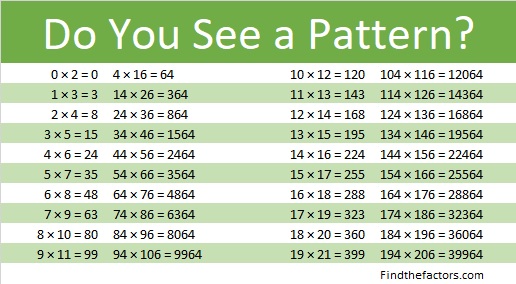
1564 is in this cool pattern:

1563 The Holly Wreath

Today’s puzzle:

A holly wreath is yet another symbol that connects Christmas with Easter. It symbolizes eternity in its color and shape. It bears white flowers, red berries, and thorns reminding us of purity, blood, and a crown of thorns.

You might find some of the clues in this level 5 puzzle to be like thorns, but don’t give up. Use logic and perseverance and you will be able to find its unique solution.

Here’s the same puzzle without all the added color:

Factors of 1563:

  • 1563 is a composite number.
  • Prime factorization: 1563 = 3 × 521.
  • 1563 has no exponents greater than 1 in its prime factorization, so √1563 cannot be simplified.
  • The exponents in the prime factorization are 1 and 1. Adding one to each exponent and multiplying we get (1 + 1)(1 + 1) = 2 × 2 = 4. Therefore 1563 has exactly 4 factors.
  • The factors of 1563 are outlined with their factor pair partners in the graphic below.

Another Fact about the Number 1563:

1563 is the hypotenuse of a Pythagorean triple:
837-1320-1563, which is 3 times (279-440-521).

1562 Evergreen Tree

Today’s Puzzle:

An evergreen tree doesn’t drop its leaves in the fall or look dead in the winter. As it reminds us of everlasting life, it makes a lovely symbol of Christmas.

Write the numbers from 1 to 10 in both the first column and the top row so that those numbers and the given clues function like a multiplication table. Here is the same puzzle that won’t use as much ink to print:

Factors of 1562:

  • 1562 is a composite number.
  • Prime factorization: 1562 = 2 × 11 × 71.
  • 1562 has no exponents greater than 1 in its prime factorization, so √1562 cannot be simplified.
  • The exponents in the prime factorization are 1, 1, and 1. Adding one to each exponent and multiplying we get (1 + 1)(1 + 1)(1 + 1) = 2 × 2 × 2 = 8. Therefore 1562 has exactly 8 factors.
  • The factors of 1562 are outlined with their factor pair partners in the graphic below.

Another Fact about the Number 1562:

2(5⁴ + 5³ + 5² + 5¹ + 5⁰) = 1562

1561 Virgács for Boots and Stockings

Today’s Puzzle:

Children living in Hungary put their nicely polished boots or stockings by a window for Mikulás (Saint Nicholas) to fill tonight. When they awake in the morning, they will find candies, and maybe nuts or fruit to reward them for the good they’ve done this past year. Because even the best children have been at least a little bit naughty sometime during the year, they will also find virgács, gold-painted twigs typically bound together with red ribbon. Now, if a child lives in a place where virgács is not available at the local market, Mikulás could copy today’s virgács puzzle and put it in any boot or stocking left out for him tonight.

Since this is a level 3 puzzle, the clues are listed in a logical order from the top of the puzzle to the bottom. After the factors of 12 and 40 are put in their respective cells, the rest of the factors can be found by working down the puzzle cell by cell until all the factors are written in.

Factors of 1561:

  • 1561 is a composite number.
  • Prime factorization: 1561 = 7 × 223.
  • 1561 has no exponents greater than 1 in its prime factorization, so √1561 cannot be simplified.
  • The exponents in the prime factorization are 1 and 1. Adding one to each exponent and multiplying we get (1 + 1)(1 + 1) = 2 × 2 = 4. Therefore 1561 has exactly 4 factors.
  • The factors of 1561 are outlined with their factor pair partners in the graphic below.

More about the Number 1561:

1561 is the sum of two consecutive numbers:
780 + 781 = 1561.

1561 is also the difference of two consecutive square numbers:
781² – 780² = 1561.

Did you notice a pattern in those two statements?

1561 is the sum of seven consecutive numbers:
220 + 221 + 222 + 223 + 224 + 225 + 226 = 1561.

1561 is the sum of the fourteen consecutive numbers from 105 to 118.

1561 is the difference of these two other square numbers:
115² – 108² = 1561.

Did you notice any other patterns? Does your pattern hold true for other multiples of 7?

Why Do Factor Pairs of 1560 Make Sum-Difference?

Today’s Puzzle:

1560 has 16 different factor pairs. One of those pairs sum up to 89, and another pair subtracts to 89. It is only the 50th time that the sum of a factor pair of a number equals the difference of one of its other factor pairs.

You may have seen other Sum-Difference Puzzles where I’ve paired one puzzle with another puzzle and mentioned that the second puzzle was really the first puzzle in disguise. That is not the case for this puzzle because 89 is a prime number. This puzzle is a primitive; there is not a simpler puzzle that is its equivalent. Don’t let that worry you, however, everything you need to solve this puzzle can be found in this post.

Although I am making a big deal about our number 1560, it is the 89 which allows this puzzle to exist in the first place. You see, 89 is the hypotenuse of a Pythagorean triple, (39-80-89), and thus, 39² + 80² = 89². Since that triple is a primitive, the sum-difference is a primitive as well.

Note that (40)(39) = 1560.
We want to use the quadratic formula to solve 40x² + 89x + 39 = 0 and 40x² + 89x – 39 = 0. Let’s combine the left sides of those two equations into one expression:
40x² + 89x ± 39.
The discriminant would be 89² – 4(40)(±39)
= 89² ± 4(40)(39)
= 89² ± 2(80)(39)
= 39² + 80² ± 2(80)(39), ( That’s because 39² + 80² = 89².)
= 80² ± 2(80)(39) + 39²
= (80 ± 39)², a perfect square!

That perfect square makes 1560 one of those relatively rare numbers with factor pairs that make sum-difference.

Factors of 1560:

  • 1560 is a composite number.
  • Prime factorization: 1560 = 2 × 2 × 2 × 3 × 5 × 13 , which can be written 1560 = 2³ × 3 × 5 × 13.
  • 1560 has at least one exponent greater than 1 in its prime factorization so √1560 can be simplified. Taking the factor pair from the factor pair table below with the largest square number factor, we get √1560 = (√4)(√390) = 2√390.
  • The exponents in the prime factorization are 2, 1, and 2. Adding one to each exponent and multiplying we get (3 + 1)(1 + 1)(1 + 1) (1 + 1) = 4 × 2 × 2 × 2 = 32. Therefore 1560 has exactly 32 factors.
  • The factors of 1560 are outlined with their factor pair partners in the graphic below.

That’s a lot of factor pairs for one number! Here’s a graphic showing those same factor pairs but with their sums and differences included:

Find the 89 in the Sum column and the 89 in the Difference column, and you will see the factor pairs by those 89’s that make the sum and difference needed to solve the puzzle.

More about the Number 1560:

1560 = 39 × 40, so 1560 is the sum of the first 39 even numbers:
2 + 4 + 6 + 8 + . . . + 74 + 76 + 78 = 1560.

1560 is the hypotenuse of FOUR Pythagorean triples:
384-1512-1560, which is 24 times (16-63-65),
600-1440-1560, which is (5-12-13) times 120,
792-1344-1560, which is 24 times (33-56-65), and
936-1248-1560, which is (3-4-5) times 312.

Since 1560 is a hypotenuse four different ways, could it be the bottom part of four different Sum-Difference puzzles? Yes!

You can find the top part of the puzzle by finding one half of the product of the first two numbers in each triple:
384 × 1512 ÷ 2 = ____________,
600 × 1440 ÷ 2 = ____________,
792 × 1344 ÷ 2 = ____________,
936 × 1248 ÷ 2 = ____________.

The numbers that go in the blanks are all between 100 thousand and one million, but each one of those numbers will have a factor pair that adds up to 1560 as well as another one that subtracts to 1560. If you find them, go ahead and brag about it! It will be quite an accomplishment!

A Factor Tree for 1560:

Here is one of MANY possible factor trees for 1560:


1559 We Need a Little Christmas Now

Today’s Puzzle:

2020 reminds me of another difficult year, 2001. In December of that year, Angela Lansbury sang We Need a Little Christmas Now with the Tabernacle Choir at Temple Square. I was able to watch the concert on television, and I remember the feeling the music brought me. What a wonderful gift music is! Yes, in 2020, we need a little Christmas now!

This level 2 puzzle brings a little Christmas now. Write the numbers from 1 to 12 in both the first column and the top row so that the puzzle functions as a type of multiplication table. I’m pretty sure you can figure it out!

Factors of 1559:

  • 1559 is a prime number.
  • Prime factorization: 1559 is prime.
  • 1559 has no exponents greater than 1 in its prime factorization, so √1559 cannot be simplified.
  • The exponent in the prime factorization is 1. Adding one to that exponent we get (1 + 1) = 2. Therefore 1559 has exactly 2 factors.
  • The factors of 1559 are outlined with their factor pair partners in the graphic below.

How do we know that 1559 is a prime number? If 1559 were not a prime number, then it would be divisible by at least one prime number less than or equal to √1559. Since 1559 cannot be divided evenly by 2, 3, 5, 7, 11, 13, 17, 19, 23, 29, 31, or 37, we know that 1559 is a prime number.

More about the number 1559:

1559 is the sum of two consecutive numbers:
780 + 779 = 1559.

1559 is also the difference of two consecutive square numbers:
780² – 779² = 1559.

(Yes, I know, any odd whole number can make a similar claim.)