1804 Desmos Christmas

Today’s Puzzle:

Merry Christmas, everybody! Can you make a Christmas design in Desmos?

Here’s how I solved this Desmos Christmas puzzle: A few weeks ago, I saw this post on Bluesky and was inspired by the climbing sine curves on the featured Desmos Christmas tree:

#mathstoday I began thinking about a Desmos activity for my year 11 in which they could make a Christmas tree. Then I got carried away, thought about climbing sine curves (tinsel) and translating polar graphs. I’m not sure it’s suitable for year 11 anymore… Oops

[image or embed]

— over-drawn.bsky.social (@over-drawn.bsky.social) November 28, 2024 at 12:34 PM

What is a climbing sine curve, and could I use one to decorate the plain Desmos Christmas tree I made last year? I had to google “climbing sine” to proceed, but I learned that it is a function such as y = x + sin(x). That’s a familiar function; I just didn’t know it had a cutesy name.

I multiplied that function by a constant. Can you figure out what that constant was?

Later, I embellished the tree even more with lights and falling snow. I hope you enjoy it!

Here are some other delightful Christmas Desmos designs I saw on Bluesky. this first one rotates in 3-D.

Happy Holidays! 🎄
http://www.desmos.com/3d/p5t7m4kh4s
#iTeachMath

[image or embed]

— Raj Raizada (@rajraizada.bsky.social) December 10, 2024 at 10:46 AM

Enjoyed re-creating this visual in the @desmos.com Geometry tool: http://www.desmos.com/geometry/lx7… #mathsky

[image or embed]

— Tim Guindon (@tguindon.bsky.social) December 11, 2024 at 1:08 PM

More snowflake fun in @desmos.com
I don’t think it can show text mirror-flipped yet (?), so for this, you type your word, screenshot it, then load it as an image.
I’m hoping to have students load in pics of their names, then snowflake-ify them.
http://www.desmos.com/geometry/afo…
#iTeachMath #MathSky

[image or embed]

— Raj Raizada (@rajraizada.bsky.social) December 17, 2024 at 11:17 AM

This next one isn’t a Desmos design, but I enjoyed its playful nature just the same. Do you recognize the number pattern?

Inspired by @studymaths.bsky.social – #MathPlay 🧮 via Pascal’s Dice 🎲🔺

#ITeachMath #MTBoS #STEM #Maths #ElemMathChat #Math #MathSky #MathsToday #EduSky

[image or embed]

— Libo Valencia 🧮 MathPlay (@mrvalencia24.bsky.social) December 12, 2024 at 4:00 AM

Factors of 1804:

I know 1804 is divisible by four because the last two digits are divisible by 4.
1804 ÷ 4 = 451. Oh, and 4 + 1 = 5, so 451 is divisible by eleven and forty-one! Here’s a factor tree for 1804:

  • 1804 is a composite number.
  • Prime factorization: 1804 = 2 × 2 × 11 × 41, which can be written 1804 = 2² × 11 × 41.
  • 1804 has at least one exponent greater than 1 in its prime factorization so √1804 can be simplified. Taking the factor pair from the factor pair table below with the largest square number factor, we get √1804 = (√4)(√451) = 2√451.
  • The exponents in the prime factorization are 2, 1, and 1. Adding one to each exponent and multiplying, we get (2 + 1)(1 + 1)(1 + 1) = 3 × 2 × 2 = 12. Therefore, 1804 has exactly 12 factors.
  • The factors of 1804 are outlined with their factor pair partners in the graphic below.

More About the number 1804:

1804 is the hypotenuse of one Pythagorean triple:
396-1760-1804, which is (9-40-41) times 44.

1804 looks interesting in some other bases:
It’s A8A in base 13 because 10(13²) + 8(13) + 10(1) = 1804.
It’s 4A4 in base 20 because 4(20²) +10(20) + 4(1) = 1804.

Why Is 1792 a Friedman Number?

Today’s Puzzle:

I’ve mentioned before that putting a 12 in one of the last two boxes will let you avoid negative numbers as you explore the relative relationship of the clues. For this puzzle, I would suggest that you put the 12 in the third from the last box. Why? Because the last triangle on the bottom has an 8 in it, and we will need to use either 12 – 8 = 4, and 4 – 2 = 2 for the last three boxes or 11 – 8 = 3, and 3 – 2 = 1.

.

After you make your way to the empty triangle on the left of the puzzle, you will notice that you are missing the numbers 1 and 8. There isn’t any way to get a 5 by subtracting those two numbers, but if you realize that 13 – 5 = 8, you should know what adjustments you need to make to solve the puzzle.

Factors of 1792:

If the last digit of a number is 2 or 6, and the next-to-the-last digit is odd, then the whole number is divisible by 4.

If the last digit of a number is 0, 4, or 8, and the next-to-the-last digit is even, then the whole number is also divisible by 4.

1792 will allow us to apply those two divisibility observations several times as we make this factor tree:

  • 1792 is a composite number.
  • Prime factorization: 1792 = 2 × 2 × 2 × 2 × 2 × 2 × 2 × 2 × 7, which can be written 1792 = 2⁸ × 7.
  • 1792 has at least one exponent greater than 1 in its prime factorization so √1792 can be simplified. Taking the factor pair from the factor pair table below with the largest square number factor, we get √1792 = (√256)(√7) = 16√7.
  • The exponents in the prime factorization are 8 and 1. Adding one to each exponent and multiplying we get (8 + 1)(1 + 1) = 9 × 2 = 18. Therefore 1792 has exactly 18 factors.
  • The factors of 1792 are outlined with their factor pair partners in the graphic below.

More About the Number 1792:

1792 is a Friedman number because 7·2⁹⁻¹ = 1792.

Notice that the digits 1, 7, 9, and 2 and only those digits are used on both sides of the equal sign, and they are used the same number of times. 1792 is only the 26th Friedman number.

1792 is the difference of two squares in SEVEN different ways:
449² – 447² = 1792,
226² – 222² = 1792,
116² – 108² = 1792,
71² – 57² = 1792,
64² – 48² = 1792,
46² – 18² = 1792, and
44² – 12² = 1792.

1768 A Polygonal Christmas Tree on Desmos

I created this polygonal Christmas tree with a polygonal star on Desmos, and it looks like it is living and breathing to me!

Later I saw this Christmas tree post and decided to share it here:

Today’s Puzzle:

Can you find the factors that belong on this Christmas factor tree for 1768?

Factors of 1768:

  • 1768 is a composite number.
  • Prime factorization: 1768 = 2 × 2 × 2 × 13 × 17, which can be written 1768 = 2³ × 13 × 17.
  • 1768 has at least one exponent greater than 1 in its prime factorization so √1768 can be simplified. Taking the factor pair from the factor pair table below with the largest square number factor, we get √1768 = (√4)(√442) = 2√442.
  • The exponents in the prime factorization are 3,1 and 1. Adding one to each exponent and multiplying we get (3 + 1)(1 + 1) (1 + 1) = 4 × 2 × 2 = 16. Therefore 1768 has exactly 16 factors.
  • The factors of 1768 are outlined with their factor pair partners in the graphic below.

More About the Number 1768:

1768 is the sum of two squares in two different ways:
38² + 18² = 1768, and
42² + 2² = 1768.

1768 is the hypotenuse of FOUR Pythagorean triples:
168-1760-1768, calculated from 2(42)(2), 42² – 2², 42² + 2²,
680-1632-1768, which is 136 times (5-12-13),
832-1560-1768, which is 104 times (8-15-17),
1120-1368-1768, calculated from 38² – 18², 2(38)(18), 38² + 18².

The first triple is also 8 times (21-220-221), and
the last triple is also 8 times (140-171-221).

1768 looks interesting in some bases you probably would never care about:

It’s 404 in base 21 because 4(21²) + 0(21) + 1(1) = 1768.
It’s 1Q1 in base 31,
YY in base 51, and
QQ in base 67.

Can you solve for Q and Y?

Two Factor Pairs of 1716 Make Sum-Difference!

Today’s Puzzle:

How many factor pairs does 1716 have? Twelve. The factors in one of those factor pairs add up to 145 and the factors in a different one subtract to 145. If you can find those two factor pairs, then you can solve this puzzle!

Try to solve it all by yourself, but if you need some help, you can scroll down to learn more about the factors of 1716.

A Factor Tree for 1716:

3 is a factor of 1716 because 1 + 7 + 1 + 6 = 15, a multiple of 3.
11 is a factor of 1716 because 1 – 7 + 1 – 6 = -11.

3 ·11 is 33. Here is one of MANY possible factor trees for 1716. This one uses the fact that 33 · 52 = 1716:

Factors of 1716:

  • 1716 is a composite number.
  • Prime factorization: 1716 = 2 × 2 × 3 × 11 × 13, which can be written 1716 = 2² × 3 × 11 × 13.
  • 1716 has at least one exponent greater than 1 in its prime factorization so √1716 can be simplified. Taking the factor pair from the factor pair table below with the largest square number factor, we get √1716 = (√4)(√429) = 2√429.
  • The exponents in the prime factorization are 2, 1, 1, and 1. Adding one to each exponent and multiplying we get (2 + 1)(1 + 1)(1 + 1)(1 + 1) = 3 × 2 × 2 × 2 = 24. Therefore 1716 has exactly 24 factors.
  • The factors of 1716 are outlined with their factor pair partners in the graphic below.

Here’s a chart of those same factor pairs but in reverse order with their sums and differences included.

More About the Number 1716:

1716 is the hypotenuse of a Pythagorean triple:
660-1584-1716, which is (5-12-13) times 132.

OEIS.org reminds us that 1716 is in the 6th and 7th columns of the 13th row of Pascal’s Triangle:

1704 Christmas Factor Tree

Today’s Puzzle:

If you know the factors of the clues in this Christmas tree, and you use logic, it is possible to write each number from 1 to 12 in both the first column and the top row to make a multiplication table. It’s a level six puzzle, so it won’t be easy, even for adults, but can YOU do it?

Factors of 1704:

If you were expecting to see a factor tree for the number 1704, here is one of several possibilities:

  • 1704 is a composite number.
  • Prime factorization: 1704 = 2 × 2 × 2 × 3 × 71, which can be written 1704 = 2³ × 3 × 71.
  • 1704 has at least one exponent greater than 1 in its prime factorization so √1704 can be simplified. Taking the factor pair from the factor pair table below with the largest square number factor, we get √1704 = (√4)(√426) = 2√426.
  • The exponents in the prime factorization are 3,1 and 1. Adding one to each exponent and multiplying we get (3 + 1)(1 + 1) (1 + 1) = 4 × 2 × 2 = 16. Therefore 1704 has exactly 16 factors.
  • The factors of 1704 are outlined with their factor pair partners in the graphic below.


More About the Number 1704:

1704 is the difference of two squares in FOUR different ways:
427² – 425² = 1704,
215² – 211² = 1704,
145² – 139² = 1704, and
77² – 65² = 1704.

Why was Six afraid of Seven? Because Seven ate Nine.
1704 is 789 in a different base:
1704₁₀ = 789₁₅ because 7(15²) + 8(15¹) + 9(15º) = 1704.

Math Happens When Two of 1632’s Factors Look in a Mirror!

Today’s Puzzle:

Both 12 and 102 are factors of 1632. Something special happens when either one squares itself and looks in a mirror. Solving this puzzle from Math Happens will show you what happens to 12 and 12².

You can see that puzzle on page 33 of this e-edition or this pdf of the Austin Chronicle. You can find other Math Happens Puzzles here.

This next puzzle will help you discover what happens when 102 and 102² look in a mirror!

Why do you suppose the squares of (12, 21) and (102, 201) have that mirror-like property?

Factor Trees for 1632:

There are many possible factor trees for 1632, but today I will focus on two trees that use factor pairs containing either 12 or 102:

Factors of 1632:

  • 1632 is a composite number.
  • Prime factorization: 1632 = 2 × 2 × 2 × 2 × 2 × 3 × 17, which can be written 1632 = 2⁵ × 3 × 17.
  • 1632 has at least one exponent greater than 1 in its prime factorization so √1632 can be simplified. Taking the factor pair from the factor pair table below with the largest square number factor, we get √1632 = (√16)(√102) = 4√102.
  • The exponents in the prime factorization are 5, 1, and 1. Adding one to each exponent and multiplying we get (5 + 1)(1 + 1)(1 + 1) = 6 × 2 × 2 = 24. Therefore 1632 has exactly 24 factors.
  • The factors of 1632 are outlined with their factor pair partners in the graphic below.

More about the Number 1632:

1632 is the hypotenuse of a Pythagorean triple:
768-1440-1632, which is (8-15-17) times 96.

1632 is the difference of two squares in EIGHT different ways:
409² – 407² = 1632,
206² – 202² = 1632,
139² – 133² = 1632,
106² – 98² = 1632,
74² – 62² = 1632,
59² – 43² = 1632,
46² – 22² = 1632, and
41² – 7² = 1632.

That last difference of two squares means 1632 is only 49 numbers away from the next perfect square, 1681.


Math Happens When Factors of 1620 Make Sum-Difference

Math Happens Puzzle:

Math Happens put another one of my puzzles in the Austin Chronicle and the Orange Leader!

You can see the puzzle on page 23 of this e-edition or this pdf of the newspaper. You can also find links to all of my Sum-Difference puzzles here.

Here is another one of Math Happen’s amazing puzzles. The tabletops shown are exactly the same. Click on it to see proof!

And how about this way:

Math Happens in many different ways as you can see in their blog post from February 5. You can also look for Math Happens on a page in the middle of each of these  2020 issues or 2021 issues of the Austin Chronicle newspaper online.

Would you like puzzles like these in your community newspaper? Have your paper contact Math Happens on Twitter and make it happen!

Today’s Sum-Difference Puzzles:

Just like the number 6 in the newspaper puzzle above, 180 and 1620 both have factor pairs that make sum-difference. To help you solve these puzzles, I’ve listed all of their factor pairs in the graphics below the puzzle.

As shown below, 180 has nine factor pairs. One of those pairs adds up to 41, and another one subtracts to 41. Put the factors in the appropriate boxes in the first puzzle.

The needed factors for the second puzzle are multiples of the numbers in the first puzzle. 1620 has fifteen factor pairs. One of the factor pairs adds up to ­123, and a different one subtracts to 123. If you can identify those factor pairs, then you can solve the second puzzle!

What Are the Factors of 1620?

  • 1620 is a composite number.
  • Prime factorization: 1620 = 2 × 2 × 3 × 3 × 3 × 3 × 5, which can be written 1620 = 2² × 3⁴ × 5.
  • 1620 has at least one exponent greater than 1 in its prime factorization so √1620 can be simplified. Taking the factor pair from the factor pair table below with the largest square number factor, we get √1620 = (√324)(√5) = 18√5.
  • The exponents in the prime factorization are 4, 2 and 1. Adding one to each exponent and multiplying we get (2 + 1)(4 + 1)(1 + 1) = 3 × 5 × 2 = 30. Therefore 1620 has exactly 30 factors.
  • The factors of 1620 are outlined with their factor pair partners in the graphic above.

Factor Trees for 1620:

Here are two of the MANY possible factor trees for 1620:

Hint: I chose to build these factor trees with those two sets of factor pairs for a reason.

More about the Number 1620:

1620 is the sum of the interior angles of a hendecagon (11-sided polygon) because
(11 – 2)180 = 1620.

1620 is the sum of two squares:
36² + 18² = 1620.

1620 is the hypotenuse of a Pythagorean triple:
972-1296-1620, calculated from 36² – 18², 2(36)(18), 36² + 18².
It is also (3-4-5) times 324.

This is only some of the math that happens with the number 1620.

1600 How Would You Describe This Horse Race?

Today’s Puzzle:

Do most of the numbers from 1501 to 1600 have 2 factors, 4 factors, 6 factors, or what? A horse race is a fun way to find the answer to that puzzle!

As I’ve done several times before, I’ve made a horse race for this multiple of 100 and the 99 numbers before it. A horse moves when a number comes up with a particular amount of factors. Some of the races I’ve done in the past have been exciting with several lead changes. In other races, one horse ran quite quickly, leaving all other horses in the dust. One previous horse race resulted in a tie.

How will you describe this horse race? Exciting or boring? Surprizing or predictable? Pick your pony and watch the race to the end before you decide on an adjective.

Click here if you would like the Horse Race to be slightly bigger.

1501 to 1600 Horse Race

make science GIFs like this at MakeaGif
Wow! I’ve not seen that happen before! Visually it looks like 4 won the race, but this horse race is really about finding the mode There are two modes, 4 and 8, for the amount of factors for the numbers from 1501 to 1600. It’s about which amount of factors comes up most often for the entire set of numbers, not which one of those occurs first. Thus, for that reason, I would describe the horse race above as deceptive. That horse race looked at the amount of factors five numbers at a time. Here’s what happens if we look at ten numbers at a time:

1501 to 1600 Horse Race (by tens)

make science GIFs like this at MakeaGif
In the second horse race, it is much more clear that the race ends in a tie, and the mode is BOTH 4 and 8.

Prime Factorization of Numbers from 1501 to 1600:

Of those 100 numbers, 38 have square roots that can be simplified; 62 do not.

Factor Trees for 1600:

1600 has MANY possible factor trees. Some are symmetrical; some are not. Here are two nicely shaped ones:

Factors of 1600:

  • 1600 is a composite number and a perfect square.
  • Prime factorization: 1600 = 2 × 2 × 2 × 2 × 2 × 2 × 5 × 5, which can be written 1600 = 2⁶ × 5².
  • 1600 has at least one exponent greater than 1 in its prime factorization so √1600 can be simplified. Taking the factor pair from the factor pair table below with the same number for both factors, we get
    √1600 = (√40)(√40) = 40. However, you could also use
    √1600 = (√4)(√400) = 2 × 20 = 40,
    √1600 = (√16)(√100) = 4 × 10 = 40, or
    √1600 = (√25)(√64) = 5 × 8 = 40.
  • The exponents in the prime factorization are 6 and 2. Adding one to each exponent and multiplying we get (6 + 1)(2 + 1) = 7 × 3 = 21. Therefore 1600 has exactly 21 factors.
  • The factors of 1600 are outlined with their factor pair partners in the graphic below.

More about the Number 1600:

1600 is the sum of two squares:
32² + 24² = 1600.

1600 is the hypotenuse of two Pythagorean triples:
448-1536-1600, calculated from 32² – 24², 2(32)(24), 32² + 24².
It is also (7-24-25) times 64.
960-1280-1600, which is (3-4-5) times 320.

1600 looks square in some other bases:
1600 = 1(40²) + 0(40) + 0(1), so it’s 100₄₀.
1600 =1(39²) + 2(39) + 1(1), so it’s 121₃₉.
1600 =1(38²) + 4(38) + 4(1), so it’s 144₃₈.
1600 =1(37²) + 6(37) + 9(1), so it’s 169₃₇.

Furthermore, 1600 is a repdigit in base 7:
1600 = 4(7³ + 7² + 7¹ + 7º), so it’s 4444₇.


1590 A Single Rose

Today’s Puzzle:

A single rose can be an elegant expression of affection. This single rose is a level 5 puzzle. Can you find its factors?

Here’s the same puzzle without any added color:

Two Factor Trees for 1590:

There are several possible factor trees for 1590. Here are two of them.

Factors of 1590:

  • 1590 is a composite number.
  • Prime factorization: 1590 = 2 × 3 × 5 × 53.
  • 1590 has no exponents greater than 1 in its prime factorization, so √1590 cannot be simplified.
  • The exponents in the prime factorization are 1, 1, 1, and 1. Adding one to each exponent and multiplying we get (1 + 1)(1 + 1)(1 + 1)(1 + 1) = 2 × 2 × 2 × 2 = 16. Therefore 1590 has exactly 16 factors.
  • The factors of 1590 are outlined with their factor pair partners in the graphic below.

More about the Number 1590:

1590 is the hypotenuse of FOUR Pythagorean triples:
138-1584-1590, which is 6 times (23-264-265),
576-1482-1590, which is 6 times (96-247-265)
840-1350-1590, which is 30 times (28-45-53),
954-1272-1590, which is (3-4-5) times 318.


1564 Two Candles

Today’s Puzzle:

Candles that are lit in the darkness can be seen from quite a distance away.  Candles and candlelight are symbols of Christmas. The babe born on that first Christmas day would become the Light of the World.

What makes a level 6 puzzle more difficult? Can you see that the common factor of 60 and 30 might be 5, 6, or 10? Which one should you use? The other two won’t work with the other clues in the puzzle.

Likewise, the common factor of 48 and 12 might be 4, 6, or 12. Don’t guess which one to use! Use logic, and find the solution to this puzzle.

One blank row and one blank column intersect in a single cell. Can you determine what number belongs in that cell before you write any other factors? That is the first thing I would do.

Here is the same puzzle without any added color:

Factor Tree for 1564:

64 is divisible by 4, so 1564 is also. Here is a factor tree for 1564 that divisibility fact:

Factors of 1564:

  • 1564 is a composite number.
  • Prime factorization: 1564 = 2 × 2 × 17 × 23, which can be written 1564 = 2² × 17 × 23.
  • 1564 has at least one exponent greater than 1 in its prime factorization so √1564 can be simplified. Taking the factor pair from the factor pair table below with the largest square number factor, we get √1564 = (√4)(√391) = 2√391.
  • The exponents in the prime factorization are 2, 1, and 1. Adding one to each exponent and multiplying we get (2 + 1)(1 + 1)(1 + 1) = 3 × 2 × 2 = 12. Therefore 1564 has exactly 12 factors.
  • The factors of 1564 are outlined with their factor pair partners in the graphic below.


More about the Number 1564:

1564 is the hypotenuse of a Pythagorean triple:
736-1380-1564, which is (8-15-17) times 92.

1564 is the difference of two squares in two different ways:
392² – 390² = 1564, and
40² – 6² = 1564. That means we are only 36 numbers away from 40² = 1600.

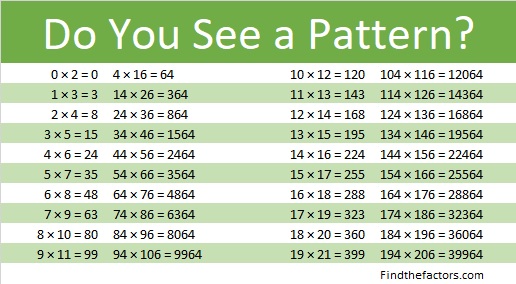
1564 is in this cool pattern: